




An 11,000-year-old wild boar pit reveals the feasting secrets of Neolithic hunters. Neolithic Feast Revolution: 11,000-Year-Old Wild Boar Transport Reveals Early Social Complexity
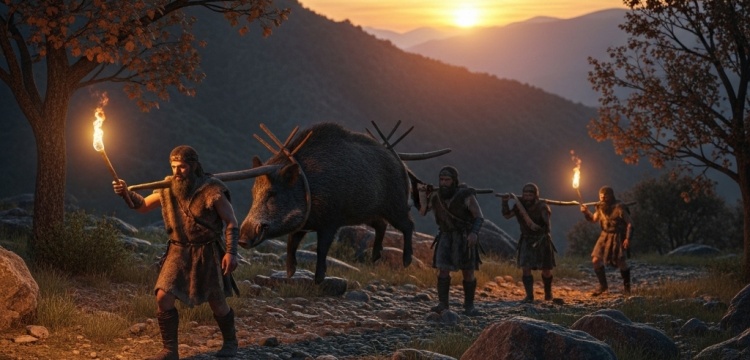
A groundbreaking study published in Communications Earth & Environment (July 2025) reveals that prehistoric communities in Southwest Asia organized complex logistical operations to transport wild boars across mountainous terrain for ritual feasts nearly 11,400 years ago. The research, led by Dr. Petra Vaiglova of Australian National University, provides unprecedented evidence of social coordination predating agricultural domestication.
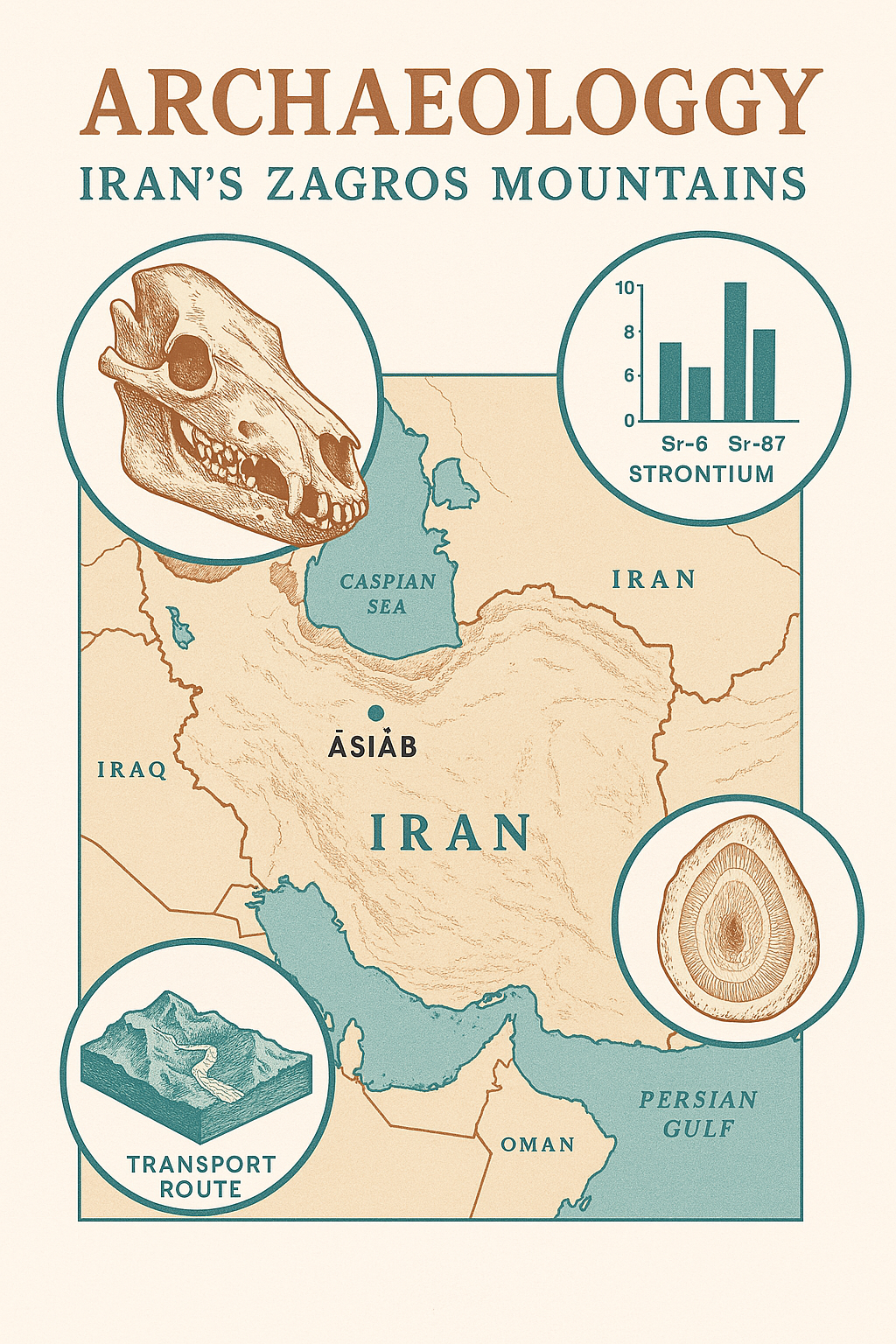
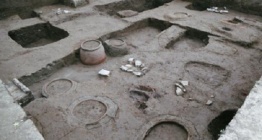
The Discovery at Asiab
The archaeological site of Asiab (34°18'1.6"N 47°86'90"E) in Iran's Zagros Mountains yielded a remarkable pit containing:
19 neatly arranged wild boar (Sus scrofa) skulls
1 brown bear skull and red deer antler fragments
Evidence of single-event deposition (ca. 9660-9340 BCE)
"This wasn't casual hunting—it was a deliberate, large-scale provisioning effort," explains co-author Dr. Pernille Bangsgaard from the University of Copenhagen.
Scientific Breakthrough: Teeth Tell All
The international team employed cutting-edge methods:
1. Dental Histology
Analyzed daily growth lines in 50μm-thick tooth sections
Calculated enamel extension rates (EER) to map development timelines
Identified seasonal barium spikes in enamel (Fig. 4)
2. Isotopic Fingerprinting
Strontium (⁸⁷Sr/⁸⁶Sr):
4 boars showed non-local ratios (0.7078-0.7085)
1 boar had local signatures (0.7068-0.7071)
Oxygen (δ¹⁸O):
2.8‰ difference between local and non-local specimens
Indicates ≥70km transport across altitudinal zones
3. Elemental Mapping
LA-ICP-MS revealed dietary changes during:
Spring births (ASB133/402)
Late summer births (ASB449)
The Feast: By the Numbers
700kg of dressed meat
350-1,200 adult servings
14-17 hour transport time (70km mountainous terrain)
5 months of tooth enamel growth analyzed
Why This Rewrites History
Pre-Agricultural Complexity: Challenges assumptions that social hierarchies only emerged with farming.
Symbolic Resource Use: Wild boars were rare in local diets but prioritized for feasts.
Logistical Mastery: Demonstrates planning beyond immediate subsistence needs.
"These weren't just hunters—they were event planners," jokes co-author Dr. Tobias Richter, while emphasizing the serious implications for understanding Neolithic social evolution.
Comparative Context
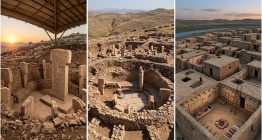
Göbekli Tepe (Turkey): Contemporary boar iconography
British Neolithic: Later evidence of ceremonial animal transport
Natufian Sites: Earlier feasting but lacking geographical scope evidence
Methodological Innovation
The study pioneers:
✔ Weekly-resolution δ¹⁸O sampling guided by enamel growth rates
✔ Combined ⁸⁷Sr/⁸⁶Sr and Ba/Ca mapping
✔ Open-access protocols (OSF repository)
Implications for Modern Science
Climate Studies: δ¹⁸O sequences reconstruct paleohydrology
Domestication Research: Wild boar management precursors
Social Network Models: Quantifies prehistoric cooperation
This research transforms our understanding of pre-agricultural societies by proving that:
⭐ Resource-intensive rituals predated domestication
⭐ Long-distance transport was integral to social bonding
⭐ Wild boars held unique cultural significance
The team now plans to analyze plant remains from Asiab to reconstruct the full feast menu.
Arkeolojikhaber.com
 Kanada’dan Türkiye’ye Tarihi İade: Kültürel Miras Evine Dönüyor
  Fener Rum Patrikhanesi'nden Çalınan Melek Heykeli 20 Yıl Sonra Yerine Döndü
  Dizi Dekoru 'Tarihi Eser' Oldu: Akademi ve Koruma Süreçleri Tartışma Gündeminde
  Gana’dan 'Tarihsel Adalet' Girişimi: Transatlantik Köle Ticareti BM Gündeminde