




An exciting discovery in Russia's Dagestan Republic reveals a previously unknown culture from the 5th millennium BCE. This ancient settlement, Dagoginskoye 2, rewrites the history of the Northeast Caucasus. Obsidian tools suggest early trade links with the South Caucasus, indicating a wider cultural interaction. This significant find, resembling Georgia's Shulaveri-Shomu-Tepe culture, promises to fill historical gaps in the Caspian Plain.
The year 2025 began with an exciting discovery for the world of archaeology. Excavations at the ancient settlement of Dagoginskoye 2, located 15 km north of Derbent in Russia's Dagestan Republic, have opened a completely new chapter in the region's history. Work carried out by teams from the Russian Academy of Sciences has unearthed traces of a previously unknown culture dating back to the 5th millennium BCE.
History Emerges from Road Construction
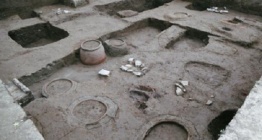
The excavations were conducted during archaeological surveys initiated prior to the construction of the R-217 "Kavkaz" highway. Preliminary investigations in 2022 had identified 13 cultural heritage sites. However, Dagoginskoye 2, unlike the others, contained two distinct cultural layers belonging to the Eneolithic (Chalcolithic) Age. While the upper layer was from the Bronze Age, the lower layer, 2 meters deep, astounded scientists.
Obsidian Tools and South Caucasus Connection
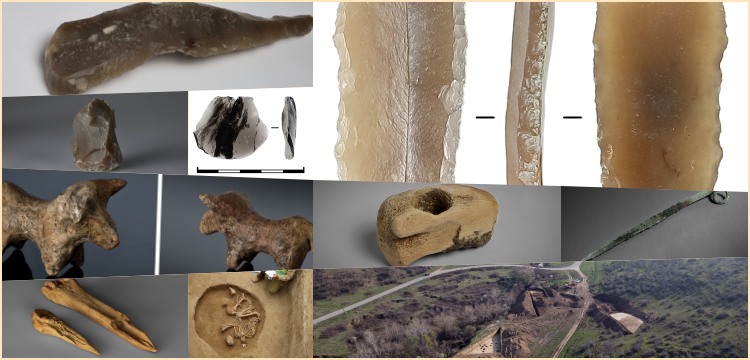
Finds unearthed during the excavations include stone tools, ceramic fragments, bone inventories, and even a bull figurine. However, the most remarkable discovery was that of obsidian (volcanic glass) tools. Since there's no volcanic activity in the Northeast Caucasus, it's believed this material may have been brought through trade from the South Caucasus. This offers crucial clues about early inter-regional relations.
Similarities with the Shulaveri-Shomu-Tepe Culture
The stone industry at Dagoginskoye 2 shows significant similarities with the Shulaveri-Shomu-Tepe Neolithic culture in Georgia. This indicates the existence of a previously unknown cultural expansion in the eastern Caucasus.
Interdisciplinary Research Continues
The scientific importance of this discovery necessitates collaborative work from various disciplines, including palynology (pollen analysis), zooarchaeology (animal remains analysis), and radiocarbon dating. Once these studies are complete, the gaps in the historical chronology of the Caspian Plain may also be filled.
Conclusion: History Can Be Rewritten
Dagoginskoye 2 could become a reference point for the Eneolithic period of the Northeast Caucasus. This discovery has the potential to alter the cultural interaction map not only of the region but of the entire Caucasus.

 Sadabad Sarayı’da ABD-İsrail Saldırıları İle Hasar Gördü: Kültürel Miras Tehlikede
  Anadolu’nun Kapısı Ani, Kültür Turizminin Yeni Merkezi
  Kolezyum’un Güney Koridorları Restorasyon Sonrası Yeniden Ziyarete Açıldı
  Sillyon Antik Kenti’nde Osmanlı Dönemine Ait Köy Meydanı Ortaya Çıkarıldı