

Ankara will host the International Archaeology Symposium on August 6, bringing together scholars from around the world. On the same day, the “Golden Age of Archaeology” exhibition will open, showcasing numerous artifacts for the first time, including the recently repatriated statue of Marcus Aurelius
The International Archaeology Symposium, scheduled to begin on August 6, will span three days. More than 250 scholars, including 29 from abroad, are expected to participate, with 33 academic presentations planned. The event will coincide with the opening of the “Golden Age of Archaeology” exhibition, which will remain on display for six months at the Presidential Complex Exhibition Hall.
Both events will be held at the Presidential Complex in Ankara, specifically within the National Library and the Exhibition Hall. This marks the first time in the history of the Turkish Republic that an archaeology-themed event is hosted at the presidential level.
The symposium and the exhibition will launch on Monday, August 6, 2025. While the symposium concludes on August 8, the exhibition will be open to the public for half a year.
Organized under the coordination of the Turkish Ministry of Culture and Tourism, the symposium will feature leading national and international archaeologists, excavation directors, and experts in cultural heritage. The opening is expected to be attended by President Recep Tayyip Erdoğan.
The symposium will include presentations on the archaeological, historical, and diplomatic significance of repatriated artifacts such as the Marcus Aurelius statue. Participants will also share recent findings from excavations across Anatolia. The program is designed to engage both academic circles and the wider public.
The twin events aim to promote Turkey’s archaeological heritage on a global scientific platform, while also highlighting new approaches to its preservation and interpretation. They also serve to reinforce cultural diplomacy and international cooperation in heritage studies.
Highlights from the Golden Age of Archaeology ExhibitionMore than 80% of the artifacts in the “Golden Age of Archaeology” exhibition will be on public display for the first time. Notable pieces include:
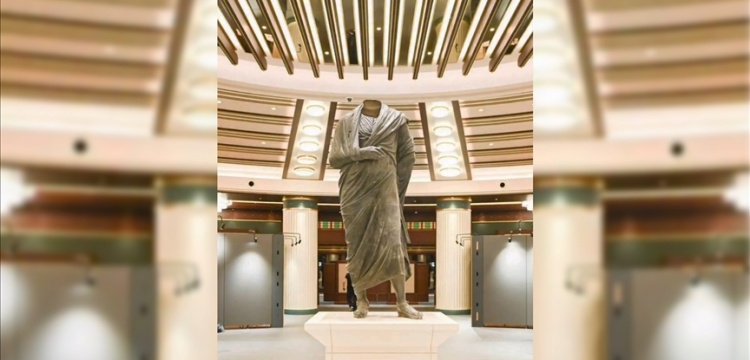
Statue of Marcus Aurelius: A Roman-era bronze statue dating to the 2nd century CE, depicting the emperor as a philosopher. It was illicitly removed from the ancient city of Boubon (Burdur) in the 1960s and entered the Cleveland Museum of Art collection. After a collaborative restitution effort involving the Turkish Ministry of Culture, the Manhattan District Attorney's Office, and the U.S. Department of Homeland Security, the statue was officially returned to Turkey in April 2024.
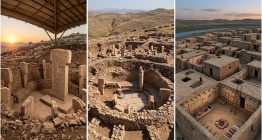
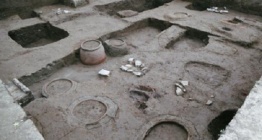
Findings from Karahantepe, one of the most significant Neolithic sites in recent decades.
A 3,500-year-old clay tablet from Hatay.
A 1,000-year-old set of perfume bottles recovered from an underwater excavation in Antalya.
The head of Skylla, discovered in Laodicea.
A sphinx statue unearthed at Gordion.
Artifacts from a unique recycling workshop found in Metropolis.
A Kybele statue from the Roman period.
A silver coin attributed to Orhan Gazi, recovered from Karacahisar Fortress and currently housed at the Eskişehir Eti Archaeology Museum.
Each piece in the exhibition has been curated to convey its own narrative, reflecting intersections of mythology, science, diplomacy, and heritage policy.
International Participation and Academic FocusA total of 33 academic presentations—17 of them by foreign scholars—will delve into themes such as:
The global dynamics of artifact restitution and repatriation
Recent discoveries in Anatolian archaeology
The historical and artistic significance of the Marcus Aurelius statue
Turkey’s excavation strategies and heritage diplomacy initiatives
International media attention is expected. Foreign correspondents based in Turkey as well as archaeology editors from major global news outlets will cover the event on-site.
Conclusion
Scheduled for August 6–8, this simultaneous symposium and exhibition stand out as landmark events in Turkey’s academic and cultural landscape. They demonstrate a shift toward institutional representation of archaeology at the highest political level, and reflect a broader strategy to position Turkey as both a producer and interpreter of archaeological knowledge. By combining scientific rigor with public engagement, the events underscore the enduring relevance of archaeology in diplomacy, education, and identity.
Arkeolojikhaber.com
 Kolezyum’un Güney Koridorları Restorasyon Sonrası Yeniden Ziyarete Açıldı
  Sillyon Antik Kenti’nde Osmanlı Dönemine Ait Köy Meydanı Ortaya Çıkarıldı
  Syedra Antik Kenti’nde Yazıtlı Mozaik: 'Kıskanan Çatlasın' İfadesi Gün Yüzüne Çıktı
  Mars Gezegeninin Yüzey Özelliklerine Sahip Salda Gölü