




Universal Script Clues: Turkish Inscriptions Linked to Indus Valley Mysteries. Ancient Turkish Site Offers New Hopes for Cracking the Indus Script. Luwian Clues from Karatepe May Help Decipher Lost Scripts of the Ancient World Karatepe Inscriptions Provide Grammatical Parallels to Indus Script
Karatepe Inscriptions May Hold Clues to Decipher the Mysteries of the Indus Valley and Inca Stone Scripts
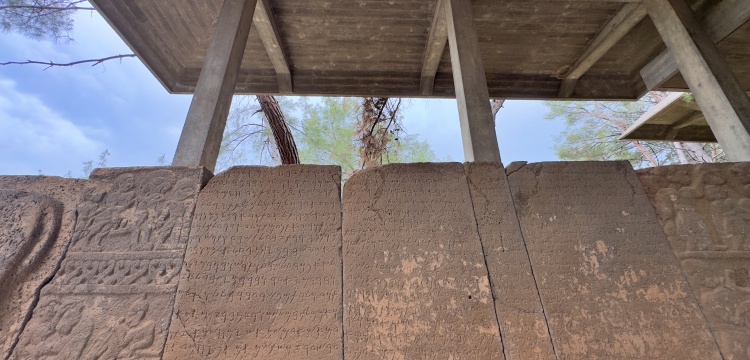
Research continues on the Karatepe inscriptions, located in the Kadirli district of Osmaniye, Turkey, and listed in UNESCO’s Memory of the World Register. Associate Professor Faris Demir from the Department of Archaeology at Osmaniye Korkut Ata University (OKÜ) has suggested that there are grammatical similarities between the Anatolian hieroglyphs found at Karatepe and the inscriptions of the Indus Valley Civilization.
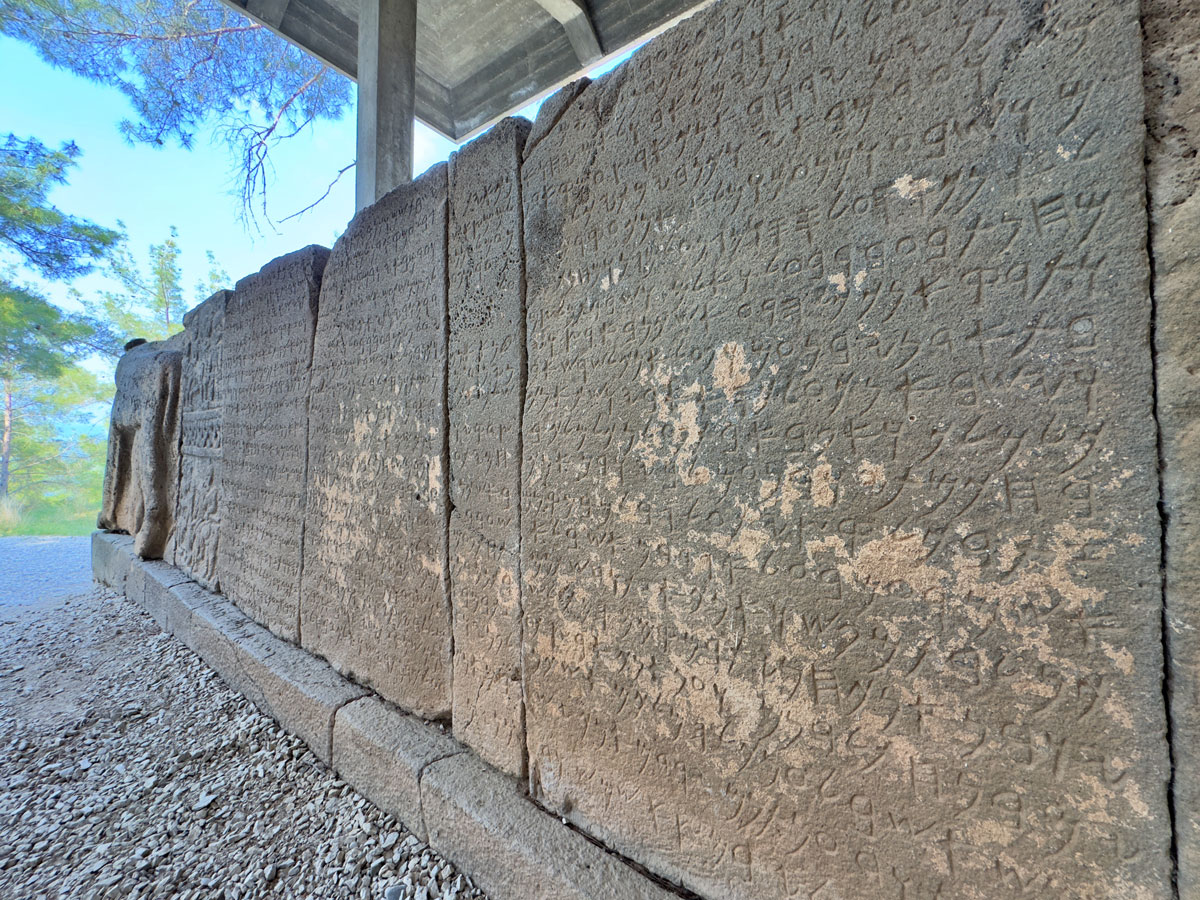
Speaking to reporters, Demir emphasized the universal significance of the Karatepe inscriptions, which are part of the open-air museum at Karatepe-Aslantaş. He pointed out that all writing systems in the world originated from pictographic representations and that pictographic writing is universal in nature — not tied to any specific language.
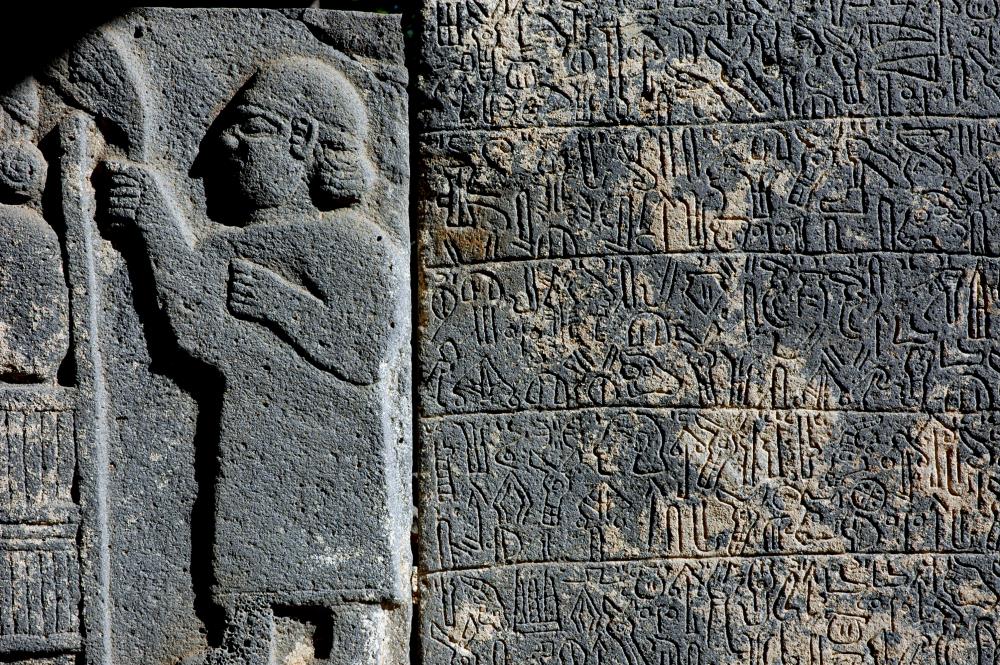
“Karatepe inscriptions possess a universal character. All scripts in the world evolved from pictographs, and pictographs are not dependent on any particular language. For this reason, the inscriptions at Karatepe may offer key insights for deciphering the Indus Valley inscriptions and the Inca stone carvings in Brazil,” Demir stated.
Demir noted that rewards have been offered for successfully deciphering the Indus script. He added that since the inscriptions at Karatepe were instrumental in reading the Luwian and Cretan hieroglyphs, their universal qualities may similarly assist in decoding the Indus Valley script. He further emphasized that the grammatical structures of the Indus inscriptions show similarities to those of the Anatolian hieroglyphs found at Karatepe.
The Enigma of the Indus Valley Script
The Indus Valley Script — also known as the Indus Script — remains one of the greatest undeciphered writing systems of the ancient world. It appeared on seals, tablets, and various objects belonging to the Indus Valley Civilization (circa 2600–1900 BCE). Following the collapse of the civilization, the script vanished as well, leaving little trace of the language it once represented.
Most artifacts bearing the script are housed in museums in Pakistan and India. Scholars continue to debate whether the script has links to Mesopotamian cuneiform or the Elamite script of ancient Iran.
First discovered in 1875, the script drew academic attention in the 1920s with the excavations of Harappa and Mohenjo-Daro. The inscriptions are typically found on stone and baked clay seals, copper tablets, ceramics, and bronze tools.
The script includes an estimated 400 to 600 distinct symbols. Some may represent words (logograms), while others might be phonetic signs. The script is believed to be written from right to left. Most inscriptions are short, typically comprising 5 to 10 symbols — the longest known inscription has 26 characters — making full decipherment extremely challenging.
The texts are thought to record ownership or trade transactions. Many seals also feature symbolic animal depictions such as bulls, rhinos, elephants, and the so-called “unicorn.”
Efforts Toward Decipherment
Unknown Language Family: The language behind the script remains uncertain. Some propose a Proto-Dravidian origin, while others suggest it predates Sanskrit.
Computational Approaches: Statistical and AI-assisted analyses indicate that the script may be partly logographic or syllabic, but no definitive conclusions have been reached.
Partial Claims: A few scholars, notably Asko Parpola, have claimed partial decipherments, though these have not gained widespread academic acceptance.
Modern Technologies: Researchers from Harvard and Indian institutions are employing AI tools and 3D scanning techniques to aid in decipherment.
Unlocking the Indus script could shed light on the socio-religious and economic life of ancient South Asia. For now, however, it remains an unsolved puzzle.
What Are Inca Stone Inscriptions?
Inca Stone Inscriptions refer to symbolic carvings, geometric patterns, and visual representations found on stone monuments, buildings, and walls dating from the Inca Empire (15th–16th centuries) in South America. Though the Incas are known for their sophisticated masonry, they did not use a formal written script. Thus, the term "inscription" often refers to symbolic motifs rather than linguistic writing.
Despite widespread destruction during the Spanish conquest, some original examples have been preserved at sites like Machu Picchu and Sacsayhuamán.
Material and Technique:
The Incas used hard stones such as andesite and granite, precisely fitting them together without mortar. This method contributed to their structures’ earthquake resistance.
Inscriptions include geometric designs (e.g., zigzags, spirals), animal figures (such as pumas, condors, and snakes), and abstract symbols. Some stones feature cosmic symbols like the Chakana (Andean Cross).
These carvings may have been used in religious rituals, astronomical observations, or administrative functions. For instance, the Intihuatana Stone in Machu Picchu is believed to have been an astronomical tool related to the sun.
Notable Examples:
Sayhuite Monolith (Peru): A giant carved rock featuring miniature temples, canals, and animal motifs.
Ollantaytambo Wall Reliefs: Trapezoidal doors and ritual niches in sacred areas.
Walls of Coricancha (Cusco): Intricate stone foundations of a temple once covered in gold.
Ongoing Debate:
Because the Incas lacked a written script, the meaning of these visual representations remains speculative. Some scholars believe the symbols relate to ceremonial practices or water management systems.

 Sadabad Sarayı’da ABD-İsrail Saldırıları İle Hasar Gördü: Kültürel Miras Tehlikede
  Anadolu’nun Kapısı Ani, Kültür Turizminin Yeni Merkezi
  Kolezyum’un Güney Koridorları Restorasyon Sonrası Yeniden Ziyarete Açıldı
  Sillyon Antik Kenti’nde Osmanlı Dönemine Ait Köy Meydanı Ortaya Çıkarıldı